
Sanford Guide Antimicrobial
Antimicrobial Therapy, Inc.Medical
4.8166.00 Reviews
- Version
- 7.2.6
- Installs
- 500.00K
- Age Rating
- Everyone
Screenshots
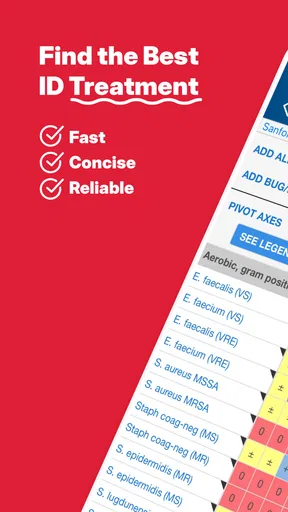
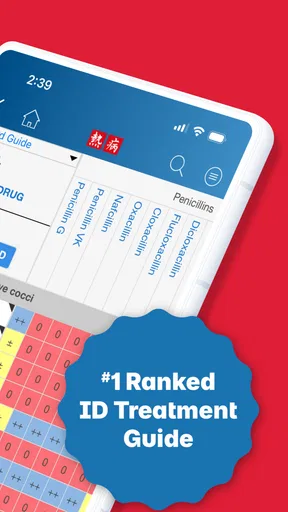
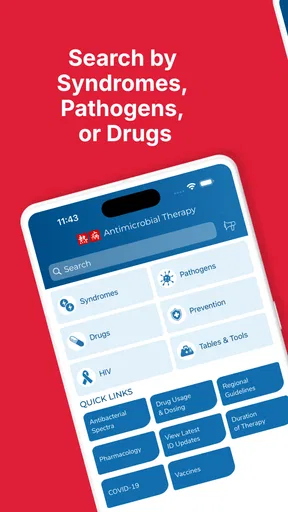
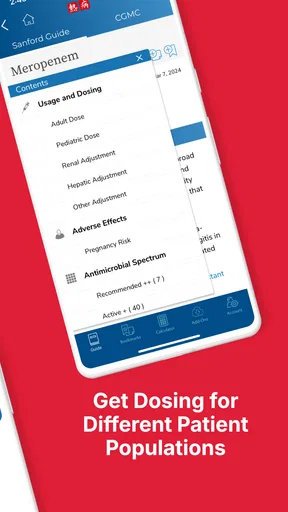
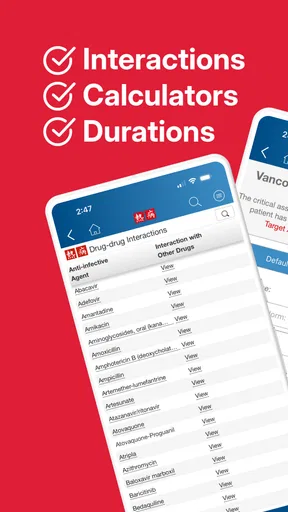
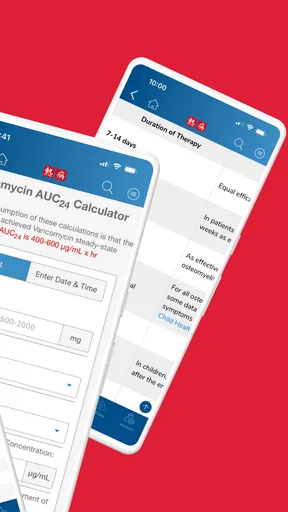

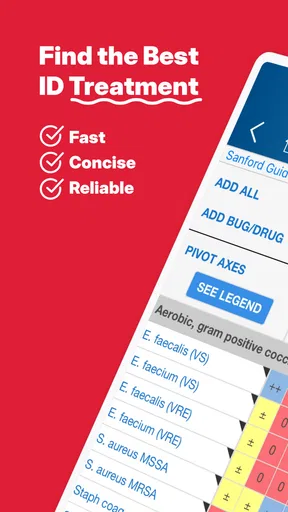
Our Review of Sanford Guide Antimicrobial
 Analysis by Appyee
When it comes to managing infections and choosing the right antimicrobial therapy, having a reliable resource in your pocket can be useful—but it should support clinical judgment, not replace it. That's where the Sanford Guide Antimicrobial app steps in. As someone who's always on the hunt for the best medical apps, I decided to give this one a whirl, and I found its appeal is clearest when you need a focused reference rather than a general medical encyclopedia.
Who benefits most from a focused antimicrobial reference
Sanford Guide is a medical app from Antimicrobial Therapy, Inc., built around infectious disease treatment. I’d see it being most useful to clinicians who already understand how to assess a patient and want a dedicated place to consult antimicrobial guidance. Trainees may also find it helpful as a companion to teaching and local protocols, especially when they want to look up a drug or pathogen without searching across broad, unrelated medical topics.
That focus is also a reason some people should skip it. If you’re looking for a general symptom checker, personal diagnosis tool, or a simple explanation of whether an infection needs medical attention, this is not the kind of app I’d choose. Antimicrobial decisions depend on the patient, the suspected site and cause of infection, allergies, test results, and local practice. A pocket reference can help organize a decision, but it cannot supply the missing clinical context.
When I compare a specialist reference like this with general medical websites or a broad search engine, the trade-off is straightforward: a focused guide can make relevant material easier to find, while open web searches may surface a wider mix of quality and context. Neither should be treated as a substitute for professional judgment. In a workplace, I’d also keep local treatment pathways close by, since institutional guidance and patient-specific factors may affect what is appropriate.
Getting to Know the Sanford Guide Antimicrobial App
First things first, downloading the Sanford Guide Antimicrobial app was a breeze. It’s available on both Android and iOS, so no matter your device preference, you’re covered. Once installed, I was greeted with a clean, user-friendly interface that’s straightforward to navigate. This isn’t one of those apps where you need a manual to figure out where everything is.
Features That Stand Out
The app is packed with features that are incredibly useful for healthcare professionals. One of my favorites is the search function. You can easily look up a pathogen or drug, and the app provides detailed guidelines on treatment options. It’s like having a comprehensive library of infectious disease information at your fingertips.
Another standout feature is the bookmarking ability. You can save frequently accessed information for quick reference. This is especially handy during a hectic day when you need to find information fast without scrolling through endless lists.
A practical way to use those tools is to build a small set of bookmarks around the topics you personally revisit, rather than trying to save everything. For example, someone rotating through infectious disease work could keep commonly consulted areas easy to reach, then search afresh when a question falls outside that routine. That approach makes bookmarks a shortcut to a starting point, not a substitute for checking whether the reference fits the patient in front of you.
In a realistic busy-shift scenario, I’d use search to locate the relevant topic, read the guidance in context, and then check the patient’s details and local protocol before acting. The value is in reducing the time spent navigating a broad library—not in turning a quick lookup into an automatic prescription. If a result raises a question about allergies, organ function, diagnostic uncertainty, or an unusual presentation, that is a cue to pause and verify with the appropriate clinical resources or a colleague.
Content and Updates
What makes the Sanford Guide Antimicrobial app particularly appealing is its regularly updated content. The medical field is always evolving, and staying updated with the latest guidelines and treatments is crucial. The app developers ensure that the information is current, which is something I genuinely appreciate. It gives me confidence that I am recommending or prescribing the most up-to-date treatments.
Moreover, the app includes detailed antibiotic resistance profiles, which is essential for making informed decisions in today’s climate where resistance is a growing concern. The data is presented in a way that’s easy to digest, even during those moments when you’re pressed for time.
Even with a regularly maintained reference, I wouldn’t assume every recommendation automatically matches a hospital’s formulary, local susceptibility patterns, or a patient’s circumstances. A useful habit is to treat the app as one step in a check: identify the relevant guidance, then reconcile it with culture results and the policies used in your setting. That distinction matters most when resistance information could influence a choice; a concise profile can orient a decision, but it does not replace local microbiology or expert consultation.
User Experience and Navigation
The developers have clearly put a lot of thought into the app’s design and navigation. It’s intuitive, with a clean layout that makes finding what you need a breeze. The color scheme is easy on the eyes, which is a blessing during long shifts when you’re constantly checking your phone for information.
One minor gripe, though, is that some sections could load a tad faster. It’s not a deal-breaker, but when you’re in a hurry, every second counts. That said, the app performs smoothly overall, and I haven’t experienced any crashes or bugs, which is always a bonus.
For speed, the most realistic expectation is quick access with occasional waiting when a section takes longer to load. I’d avoid relying on any app as the sole plan for an urgent decision: have the relevant institutional pathway and a colleague or specialist available when the situation needs more than a reference lookup. The app’s focused scope can make repeated searches feel efficient, but a slow moment is still a reminder to keep a backup route for time-critical questions.
Heavy use is less about opening a large collection of unrelated tools and more about returning to a narrow set of infectious disease topics throughout the day. In that pattern, a tidy bookmark collection can reduce repeated navigation. I would still re-open and review the full guidance when the clinical question changes; a saved page may be convenient, but it is not a signal that the same answer applies to a different patient or infection.
On reliability, I found the overall experience smooth, although a reviewer’s uneventful sessions cannot promise that every device or future session will behave identically. If a page is slow or the app does not respond as expected, I’d retry the lookup and use the usual approved clinical resource rather than guessing. For any medical reference, the sensible measure of dependability is not just whether it opens, but whether you can verify the answer and apply it safely.
Pricing and Accessibility
The app is free to download, with in-app purchases ranging from $4.99 to $79.99 per item. That makes it possible to install and explore before deciding whether a purchase suits your needs, though I would check the purchase options in the app before budgeting for regular use. Its average rating is 4.8 from around 4.5K ratings, and it has been installed over 500K times. Those figures suggest a substantial audience, but they don’t tell you whether the available content fits your specialty or workflow, so I’d judge it by trying the parts relevant to your work.
It is rated for Everyone, but that age label should not be confused with a recommendation for unsupervised medical use. The app is a professional reference, not personal treatment advice. The current version is 7.1.3, and it requires Android 9 or later. If you use an older device, check compatibility before planning to depend on it. As with any clinical app, I’d also consider whether your device is available, charged, and permitted for use in the setting where you work.
Device constraints are practical rather than dramatic: a reference is only useful if it opens on the phone you actually carry and is comfortable to read in your work environment. I’d test navigation on your own screen before relying on it during a busy shift. If you prefer a larger display for comparing information or reviewing a topic in depth, a desktop reference or your organization’s clinical system may be the better choice; the phone format is strongest for quick checks between other tasks.
Because purchases are offered within the app, I’d make the decision based on your expected frequency of use, not on the assumption that every clinician needs every paid option. A student or occasional user may have different needs from someone who consults antimicrobial guidance every day. Installing it first and examining how it fits your workflow is a sensible way to decide, while keeping in mind that a download alone does not establish that all useful content is available without purchase.
Final Thoughts
Overall, the Sanford Guide Antimicrobial app is a robust tool for anyone involved in healthcare. Its focused content, ease of use, and regularly maintained reference make it a worthy addition to a clinical toolkit. Whether you’re a seasoned professional or a student just starting out, this app can make navigating antimicrobial information easier, provided you use it alongside clinical judgment and the guidance relevant to your setting.
So, if you’re looking for a dedicated reference that fits in your pocket, give the Sanford Guide Antimicrobial app a look. I’d recommend it most to healthcare professionals who want a focused way to search infectious disease treatment topics and revisit useful material. If you need general health advice, a patient-facing explanation, or an immediate answer without checking the clinical context, another resource is a better fit. Its performance is best understood as convenient rather than infallible: keep a backup for urgent situations, verify recommendations against the patient and local practice, and decide whether its purchase options make sense for how often you’ll use it.
Verdict
Strengths of Sanford Guide Antimicrobial
- Comprehensive database of antimicrobial treatments.
- Regular updates with the latest medical guidelines.
- User-friendly interface for quick access.
- Search function is fast and accurate.
- Offline access to information is available.
Limitations of Sanford Guide Antimicrobial
- Requires subscription for full access.
- Initial app setup can be confusing.
- Limited to English language only.
- May be overwhelming for non-medical users.
- No integration with other medical apps.
Similar Picks in This Category
View All
WebMD: Symptom Checker
WebMD, LLC4.1

Microphone Amplifier
DOSA Apps4.2

Anatomy Learning - 3D Anatomy
3D Medical OU4.5

Period Tracker and Calendar
SimpleInnovation4.9

GoodRx: Prescription Coupons
GoodRx4.8

CVS Health
CVS Pharmacy4.5
Frequently Asked Questions
What is the Sanford Guide Antimicrobial app used for?
The Sanford Guide Antimicrobial app provides healthcare professionals with comprehensive information on antimicrobial therapy. It includes guidelines for treating infectious diseases, details on drug interactions, and dosage recommendations. This app is designed to help clinicians make informed decisions in real-time, ensuring effective patient care.
Is the Sanford Guide Antimicrobial app regularly updated?
Yes, the Sanford Guide Antimicrobial app is regularly updated to reflect the latest research and guidelines. This ensures that users have access to the most current information on antimicrobial therapy, helping them stay informed about new treatments, resistance patterns, and drug approvals.
Can I use the Sanford Guide Antimicrobial app offline?
The app supports offline access, which allows users to view content without an internet connection. This feature is particularly useful for healthcare professionals working in areas with limited connectivity, ensuring they can access crucial information at any time.
How user-friendly is the Sanford Guide Antimicrobial app?
The app is designed with a user-friendly interface, featuring intuitive navigation and search functionalities. It allows users to quickly find information on specific pathogens, treatments, and guidelines, making it efficient for busy healthcare professionals who need quick access to data.
Is there a subscription fee for the Sanford Guide Antimicrobial app?
Yes, the Sanford Guide Antimicrobial app typically requires a subscription fee. This fee supports continuous updates and access to the comprehensive database. Pricing details can vary, so it’s recommended to check the app store for the latest subscription options and offers.
